
Case Study: Northern Cancer Alliance (NCA) – Leadership Bite Size Masterclasses
“The Northern Cancer Alliance has worked in partnership with 360 Degree Society since 2018 to co-produce high-quality leadership development programmes for cancer MDTs. Their deep understanding of clinical environments and MDT dynamics has been instrumental in supporting both clinical and non-clinical leaders to develop the confidence, skills and behaviours required for effective collective and distributed leadership.
The MDT leadership programme was expertly designed and delivered, with content pitched at exactly the right level and consistently evaluated as excellent by participants. 360 Degree Society worked flexibly and collaboratively with us, providing trusted, well-balanced advice and acting as a critical friend when needed, while always delivering to agreed objectives and timescales.
Evaluation evidence clearly demonstrates that participants have translated learning into practice, with tangible improvements in how MDTs prepare, lead discussions, manage dynamics and work together more effectively. We have valued the partnership with 360 Degree Society; we would be confident if we worked with them again in the future we would continue to strengthen leadership across our cancer system.”
Executive Summary
The Northern Cancer Alliance (NCA) commissioned 360 Degree Society (for a third time building on the success of their initial partnership in 2018 and 2022). The core objective was to develop Core members of Cancer Multi-disciplinary Teams (MDTs) to support their leadership development of their teams operating effectively and adhered to recommendations for streamlining meetings.
The programme delivered measurable value through increased leadership confidence, improved communication, and enhanced team functionality. All sessions were evaluated to an excellent standard. Crucially, analysis showed strong intent to implement the learning, with over 99% of participants planning to alter how they prepare, lead, or communicate within MDTs. This engagement confirmed a substantial return on investment (ROI) through improved MDT dynamics.
Background and Activity
The NCA commissioned the provider to design and deliver bite size leadership masterclass topics aimed at continuing to support clinicians in their leadership roles.
The masterclasses were half-day sessions, each repeated three times, and included a range of resources, tools, and techniques. Over 60 chairs and Core members attended the sessions.
The bite size leadership topics covered four main areas:
System thinking and system leadership focusing on system thinking, using system mapping tools to analyse and look to improve MDT operations Encouraging them to think and apply system leadership encouraged a broader understanding of systemic influences on MDT functioning
Emotional Intelligence (EI): Focused on gaining greater insight into themselves as leaders, their EI, and how to support sustaining their EI and leadership behaviours.
Effective Chairing – Ensuring meetings are outcome-focused: Explored best practice in preparation, planning, structure, pursue and reviewing meetings and included interactive skills practice for effective facilitation and managing dynamics/unhelpful behaviours.
Conflict Resolution and having difficult Conversations within the MDT: exploring conflict, tools and techniques for resolution, planning and preparation for difficult conversation with interactive skills practice in having difficult conversations in MDTs.
Evaluation Methodology
The leadership bite size webinars were rigorously evaluated using Kirkpatrick’s Evaluation Framework.
Levels 1 (Reaction) and 2 (Learning): Evaluated immediately after each session to gauge participants' satisfaction with content and delivery, and assess knowledge gained.
Levels 3 (Changes in Behaviour) and 4 (Results): Assessed after the initial learning to understand how learning was transferred into roles and determine the long-term ROI.
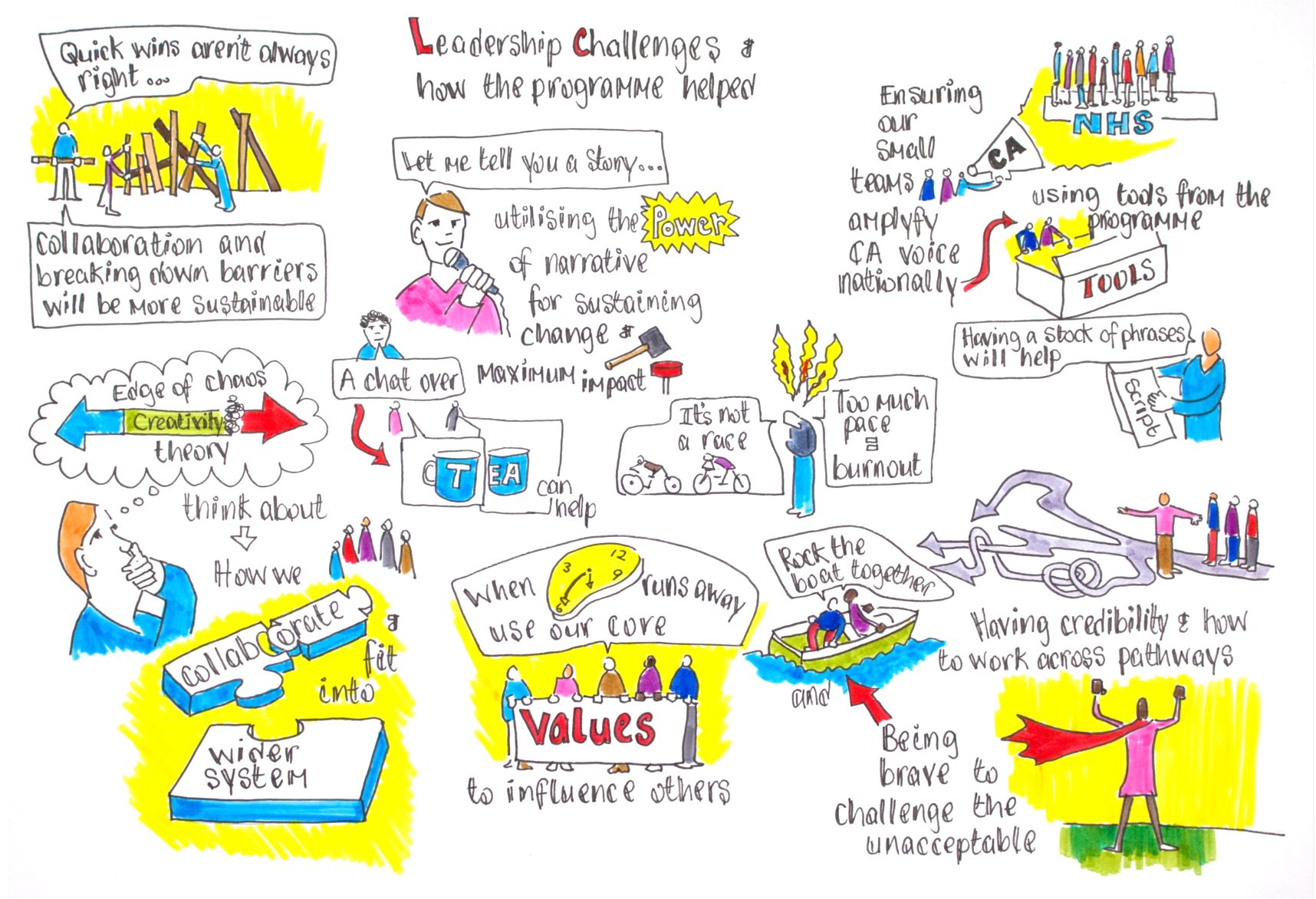
Leadership Challenges and How The Programme Helped Infographic. Image credit: Matt Worden
Key Results and Return on Investment (ROI)
Immediate Impact and Learning (Levels 1 & 2)
100% reported that attending the programme has or will help them lead their MDTs more effectively. Feedback confirmed the high quality and relevance of the content and delivery:
100% of participants agreed or strongly agreed that the learning objectives met their specific needs.
100% reported that attending the programme has or will help them in their current roles.
The delivery team received positive comments for being ‘interactive,’ ‘well facilitated,’ and providing ‘Excellent, practical skills I have learnt at each session’.
Participants highly valued the practical insight gained:
‘Insight into emotional intelligence where powerful and understanding the importance of these as a leader’.
The chairing session was highlighted as ‘one of the best sessions I have taken part in, practical tools to help chair meetings more effectively’.
The delivery team was praised for being ‘interactive,’ ‘well facilitated,’ and providing ‘Excellent, practical skills I have learnt at each session’.
Participants specifically valued the Chairing session, with one noting it ‘was one of the best sessions I have taken part in, practical tools to help chair meetings more effectively’.
Transfer of Learning and Behavioural Change (Levels 3 & 4)
The evaluation confirmed significant behavioural shifts and capability development, highlighting a positive cultural shift within MDTs. 100% of participants felt that their leadership confidence and capabilities had grown.
"I feel more confident, effective, assertive to do my MDT role".
"I feel the training has improved my own self-confidence in my ability to work with clinicians, at a senior level to me".
1. Systems Thinking and Leadership
Participants committed to analysing MDT challenges through a wider systems lens.
Techniques like system mapping and the onion diagram were widely used or committed to being used to analyse and improve MDT operations.
Key learning included realising ‘the importance of shared problem solving’ and as an MDT solving our issues through a system thinking, system leadership lens.
Participants were encouraged to be ‘more aware of the bigger picture within MDT and system working’.
2. Emotional Intelligence and Self-Awareness)
The focus on self-awareness and emotional regulation resulted in better teamwork and communication.
Participants reported:
‘It has led to me having less conflict with difficult people, I remain calm and self-regulate now’.
Learning about emotional state significantly influenced their approach, making them ‘reflect more before starting something’.
The focus on the difference between a good day and a bad day helped participants realise that ‘my state of mind and approach can very much influence how something can go and has made me reflect more before starting something’.
Participants committed to using the ‘5-second pause’ technique to respond, rather than react, especially when confronted with negative emotions.
3. Effective Chairing and Meeting Management
Participants actively implemented structured meeting practices, including setting expectations and ground rules.
Participants noted they ‘set up ground rules to apply with the MDT team—these were fantastic, and it has made such a difference to how my meetings run’.
The training shifted the perception of the chair’s role: ‘The training showed me how to involve people in the meeting to shift ownership and engagement to the whole team’.
The emphasis on preparation and ground rules helped one individual ‘influence the outcome and make even better MDT meetings.
4. Conflict Resolution and Difficult Conversations
Participants gained confidence in proactively managing conflict through structured methods.
Key frameworks learned included the OFNR (Observe-Feel-Need-Request) model and insights from the Thomas-Kilmann Conflict Mode Instrument (TKI).
One individual noted they would commit to being ‘more intentional about creating space for every team member’s voice’.
The opportunity to practice challenging conversations was highly evaluated, with one comment noting the skills practice helped them ‘to try and look at the context of situations and to remain calm’.
5. Networking and Collaboration
The networking aspect was highly valued, offering opportunities to share ideas and learn from colleagues involved in similar work. Networking was described as ‘excellent’ and ‘so useful’ for building on learning for their own MDTs.
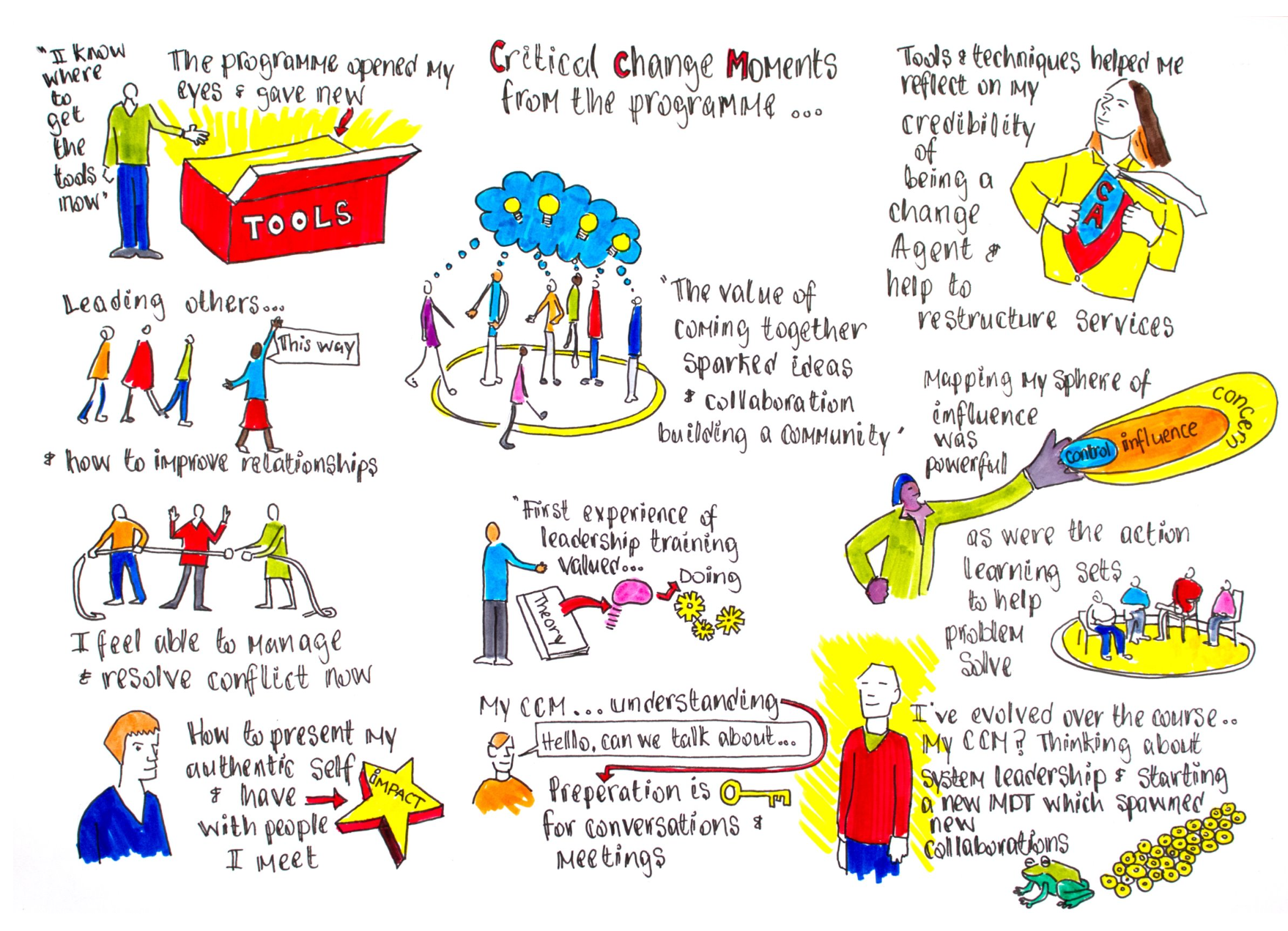
Critical Change Moments from the Programme. Image credit: Matt Worden
Conclusion
The NCA MDT Leadership Webinar Series delivered substantial ROI by providing MDT leaders with practical tools and frameworks to improve their leadership, communication, and conflict resolution skills. The uptake of tools, such as the OFNR framework and the 5-second pause, and the demonstrated intent to apply learning highlight a shift towards more effective, inclusive, and patient-centred MDT practices.