
What Does It Really Take to Lead Across a System?
Most leaders are good at leading within their organisation. They understand the culture, they know the people, they can navigate the politics. But today’s most pressing challenges — in health, housing, education, and beyond — don’t sit neatly inside any single organisation’s boundaries.
That’s where systems leadership comes in. And it requires something quite different.
At 360 Degree Society, we’ve spent years working alongside leaders in Cancer Alliances, NHS systems, local authorities, and community organisations who are trying to do exactly this: lead effectively across complex, multi-organisational systems where they don’t hold all the authority, can’t control all the variables, and can’t succeed alone. This piece sets out what we’ve learned about what systems leadership actually looks like — and what it takes to do it well.
More than a job title
Systems leadership isn’t a role you’re appointed to. It’s a practice. A way of showing up, building relationships, and exercising influence that goes far beyond the boundaries of your own team or organisation.
A systems leader is purpose and values-driven. They work across organisational boundaries, building connections and driving positive change not just through what they do, but through how they do it — and how they develop those around them to do the same.
At their best, systems leaders act as connectors and catalysts. They don’t just participate in the system — they help to shape it. They bring people and organisations together around shared goals, facilitate the difficult conversations, and create the conditions for collective action that no single body could achieve alone.
The three dimensions: Knowing, Doing and Being
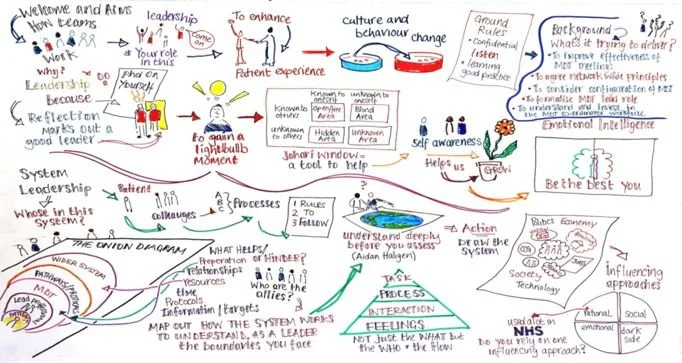
When we work with systems leaders, we think about their development across three interconnected dimensions. These aren’t a checklist — they’re a framework for understanding the full picture of what high performance looks like.
(Cancer Alliance System Leadership Image by Matt Worden)
Knowing — the foundations
Systems leaders need a strong grounding in how complex systems actually work. That means understanding systems thinking and organisational dynamics; appreciating the interconnections across a broader ecosystem; and staying current with modern leadership approaches, digital transformation, and data-driven decision making. It also means understanding the principles of building strategic partnerships and the often subtle power dynamics at play in complex multi-stakeholder environments.
Doing — the practice
Knowledge alone isn’t enough. Systems leaders need to be able to put it into action — building and maintaining cross-organisational relationships, creating aligned priorities across system boundaries, and navigating complex stakeholder landscapes with confidence. They lead through influence rather than authority, crafting compelling narratives, facilitating multi-stakeholder discussions, and applying new ways of thinking to genuinely complex challenges. They balance coaching and directive approaches depending on what the moment demands, and they’re not afraid of conflict or accountability.
Being — the mindset
This is perhaps the hardest dimension to develop, and the most important. Systems leaders demonstrate genuine curiosity — in others’ perspectives, in new approaches, in the system itself. They embrace ambiguity rather than resisting it. They model transparency, show entrepreneurial courage, and create psychological safety for those around them. Crucially, they prioritise the collective benefit of the system over individual or organisational advantage — even when that’s uncomfortable.
The Maturity Model: where are you on the journey?
Systems leadership isn’t binary. It develops over time, through experience, reflection, and deliberate practice. Our Systems Leadership Maturity Model describes five stages of development, from Emerging through to Transformational Leader.
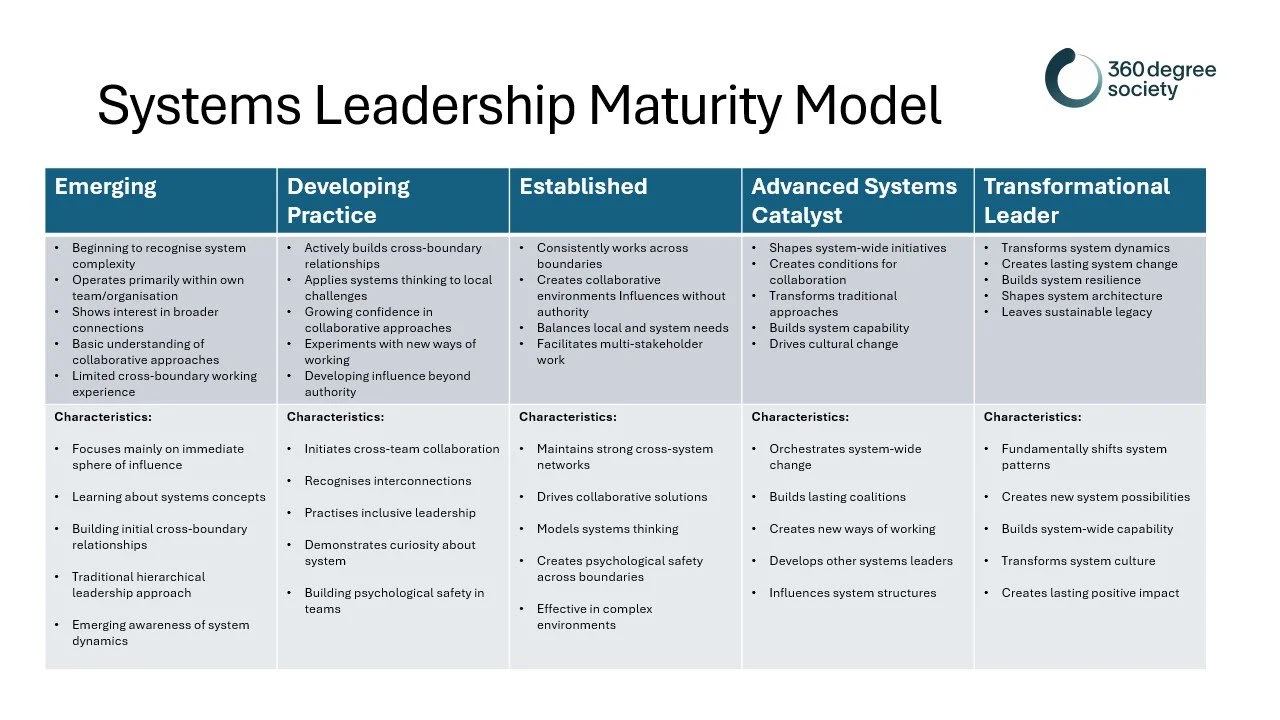
Image: 360 Degree Society Systems Leadership Maturity Model
At the Emerging stage, a leader is beginning to recognise system complexity. They operate primarily within their own team or organisation, are starting to show interest in broader connections, and may have limited cross-boundary working experience. This isn’t a criticism — it’s a starting point.
As someone moves into Developing Practice, they’re actively building cross-boundary relationships, applying systems thinking to local challenges, and growing their confidence in collaborative approaches. They’re experimenting with new ways of working and developing their influence beyond their formal authority.
The Established systems leader consistently works across boundaries. They create collaborative environments, influence without authority, balance local and system needs, and facilitate multi-stakeholder work effectively.
At the Advanced Systems Catalyst stage, a leader is shaping system-wide initiatives — creating conditions for collaboration, transforming traditional approaches, building system capability, and driving cultural change across the organisations they work with.
The Transformational Leader operates at the highest level: fundamentally shifting system patterns, creating new possibilities, building system-wide capability, and leaving a sustainable legacy that outlasts their own involvement.
Most leaders we work with sit somewhere between Emerging and Established when we first encounter them. The aim of our development work is to support meaningful, measurable movement along that journey.
Why this matters now
The challenges facing health and care systems — and many other public and social sectors — are not going to be solved by better organisations working in isolation. They require leaders who can think and act at system level, build genuine trust across boundaries, and create the conditions for sustained collective change.
That kind of leadership doesn’t happen by accident. It needs to be understood, developed, and supported.
Our work with Cancer Alliances across England is one example of what this can look like in practice: supporting multi-disciplinary teams to lead across systems through a combination of diagnostic tools, structured development programmes, and sustained coaching and facilitation. We start where leaders are, work to understand the system they’re operating in, and build from there.
Where to start
If you’re a leader working across a complex system — or if you’re responsible for developing those who are — the most useful question isn’t “How do I become a better leader?”
It’s: “What does this system need from its leaders right now, and how do I develop the capacity to provide it?”
We’d love to talk. Whether you’re thinking about individual development, team capability, or system-wide change, get in touch to start the conversation.