
Investing in the Teams Behind System Leadership
Cancer Alliances are being asked to do more than ever before. As the National Cancer Plan expands their role as system leaders, success increasingly depends not only on strategy and delivery, but on the ability of teams to influence, collaborate and lead across organisational boundaries. In June, we partnered with Humber and North Yorkshire Cancer Alliance (HNYCA) and Northern Cancer Alliance (NCA) to help strengthen exactly those capabilities.
Artwork by Matt Worden
Creating Space to Lead Differently
Both sessions provided a rare opportunity for teams to step away from operational pressures and focus on the relationships, behaviours and shared understanding that underpin effective system leadership.
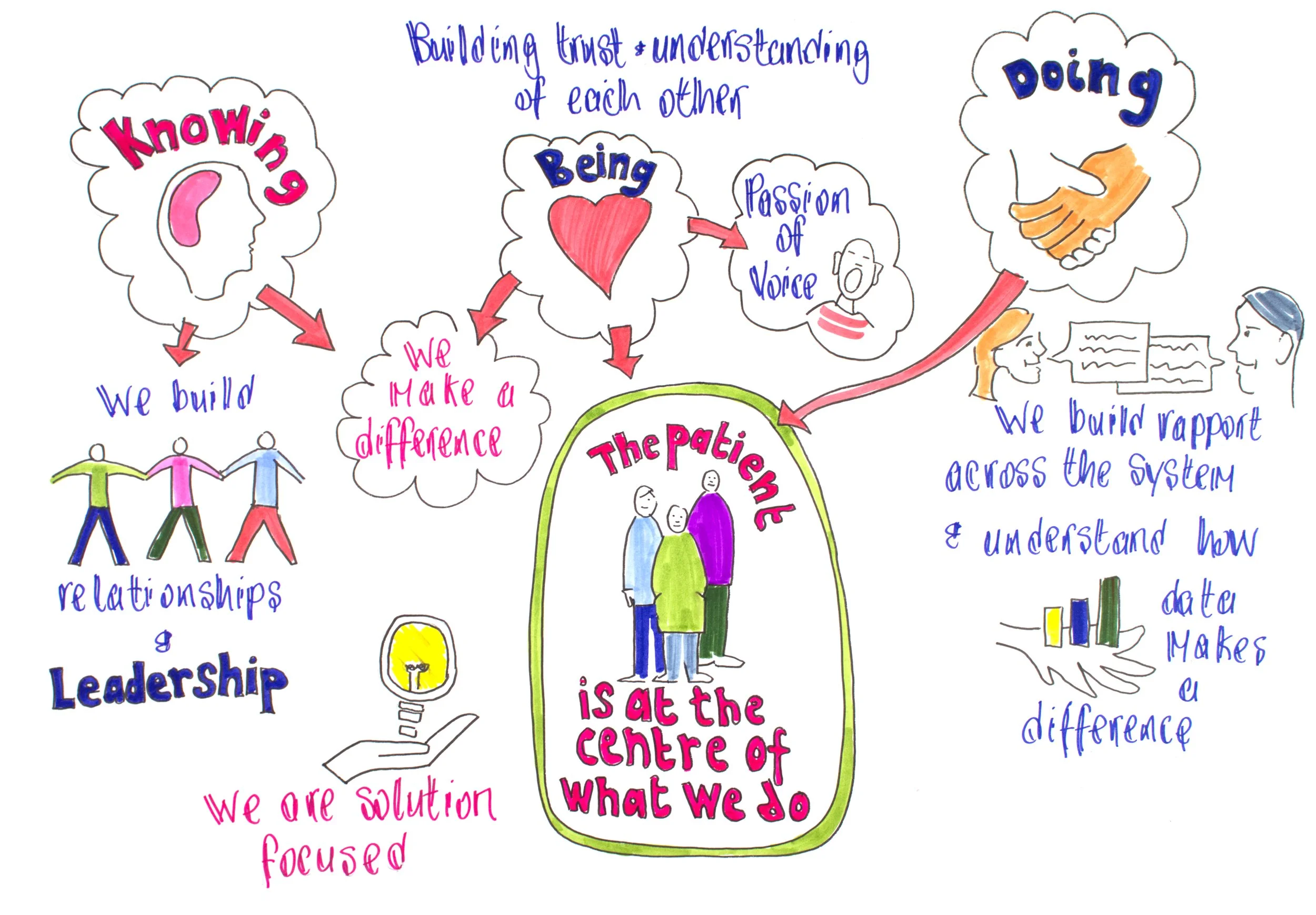
At HNYCA, colleagues explored the complexity of the environment they lead within through a 'chaos theory' exercise, before applying a Being, Knowing and Doing lens to understand the different dimensions of leadership required to influence change across organisational boundaries. Through a partner-perspective exercise, the team reflected on how its collective strengths are perceived by Integrated Care Boards, providers, patient representatives and voluntary sector partners. The day concluded with a discussion on psychological safety and what enables people to challenge constructively, innovate confidently and openly acknowledge when something has not worked.
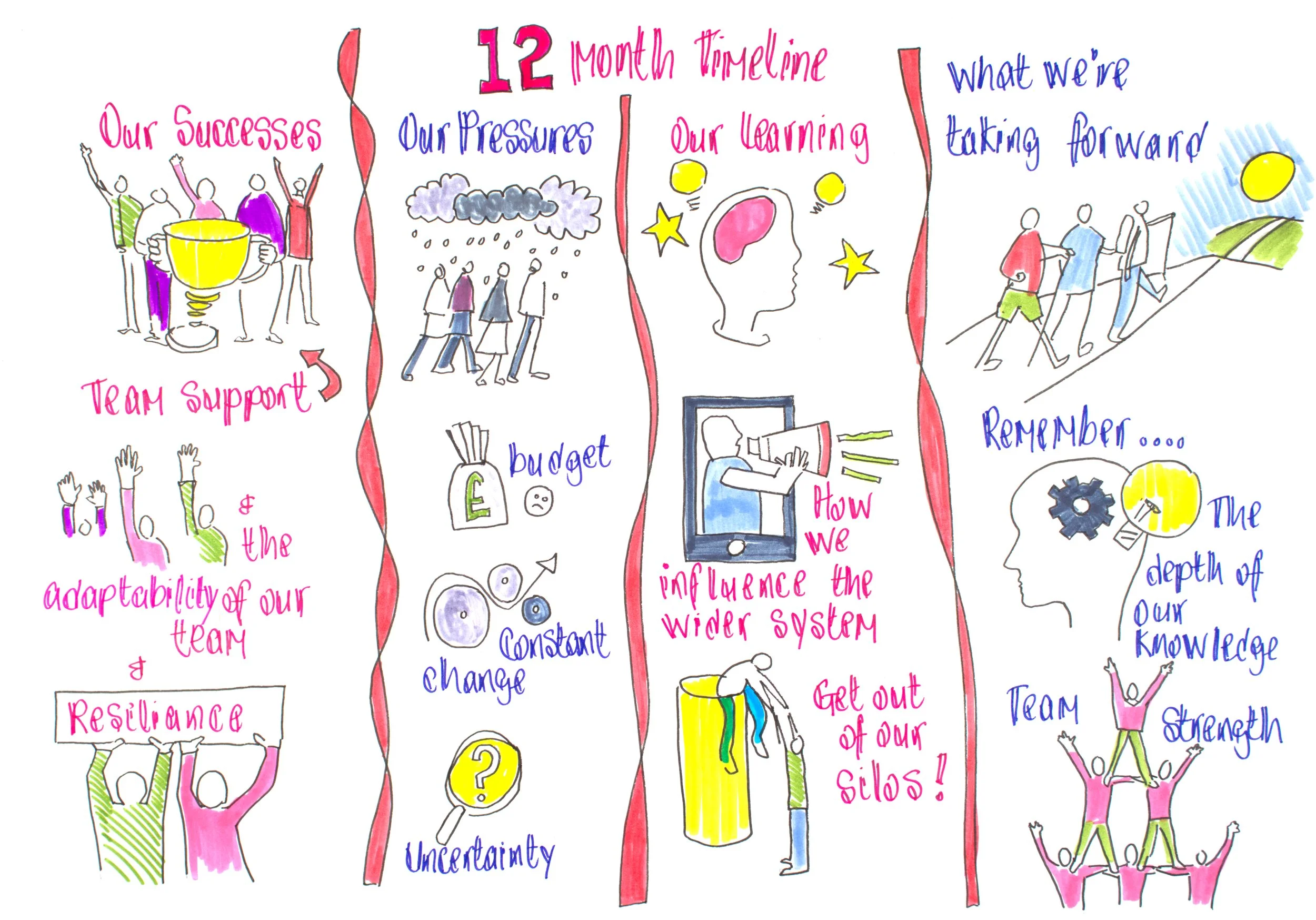
At NCA, the focus began with reflection on the previous 12 months, exploring successes, pressures and key lessons learned. Building on pre-work that identified individual strengths and preferred ways of working, the team examined how these assets contribute to collective leadership across the wider system. The afternoon centred on refreshing shared values and behaviours before translating these into practical commitments, with every participant leaving with clear actions and personal pledges.
Why Team Development Matters
Professor Michael West's research highlights that only around four in ten NHS staff work within a genuine 'real team'—one with shared objectives, collective accountability and regular opportunities for reflection. Yet teams that routinely reflect together achieve significantly higher performance and better patient outcomes. These benefits depend on trust, psychological safety and an openness to learning from both success and failure.
With the National Cancer Plan now expecting Cancer Alliances to drive improvement across organisations they do not directly manage, these foundations become increasingly important.
What the Teams Told Us and outputs from the sessions.
Key outcomes from the sessions included: a stronger understanding of system complexity, greater awareness of individual and collective leadership strengths, refreshed team values and behaviours, agreed action plans with clear ownership, and personal commitments to support future collaboration and delivery across the cancer system.
Alongside the quantitative feedback, participants consistently described the sessions as inspiring, insightful, thought-provoking, energising, valuable and re-motivating.
Each team also co-produced a key theme report and action plan, ensuring that reflection translated into practical commitments and next steps.
Artwork by Matt Worden
The Bigger Picture
Teams given structured opportunities to reflect become more than high-performing services—they become effective system leaders. Trust enables colleagues to have honest conversations about challenges and opportunities. Those conversations create the conditions for innovation, continuous improvement and stronger collaboration.
The same trust that strengthens relationships within a team also strengthens relationships across organisations. It enables Cancer Alliances to work meaningfully with Integrated Care systems, Boards, providers, community partners and patient representatives, moving beyond coordination towards genuine partnership.
System leadership is not an additional responsibility sitting alongside the day job. It is the natural extension of effective teamwork across organisational boundaries.
As Cancer Alliances take on a greater leadership role within Integrated Care Systems, the ability to influence, collaborate and mobilise partners will become increasingly important. Investing in team development is therefore not separate from delivery—it is one of the foundations of delivery. Strong systems are built by strong teams, and strong teams are built through reflection, trust and shared purpose.